Some days, you just don’t feel like doing anything.
You know what you should be doing – exercising, working, improving yourself – but you simply don’t have the motivation to start. I’ve personally gone through this many times. There were days when I had plans to be productive, but I just couldn’t take the first step.
If you’ve been trying to build habits when you have no motivation, you’re not alone. Most people struggle with this, especially in the beginning.
The problem is not you – it’s the way we think about motivation.
We often believe we need motivation to take action. But in reality, motivation comes and goes. It’s not something you can rely on every day.
The truth is simple:
👉 You don’t need motivation to build habits.
👉 You need a system that works even when you don’t feel like doing anything.
In this guide, I’ll share simple and practical ways to build habits without relying on motivation.
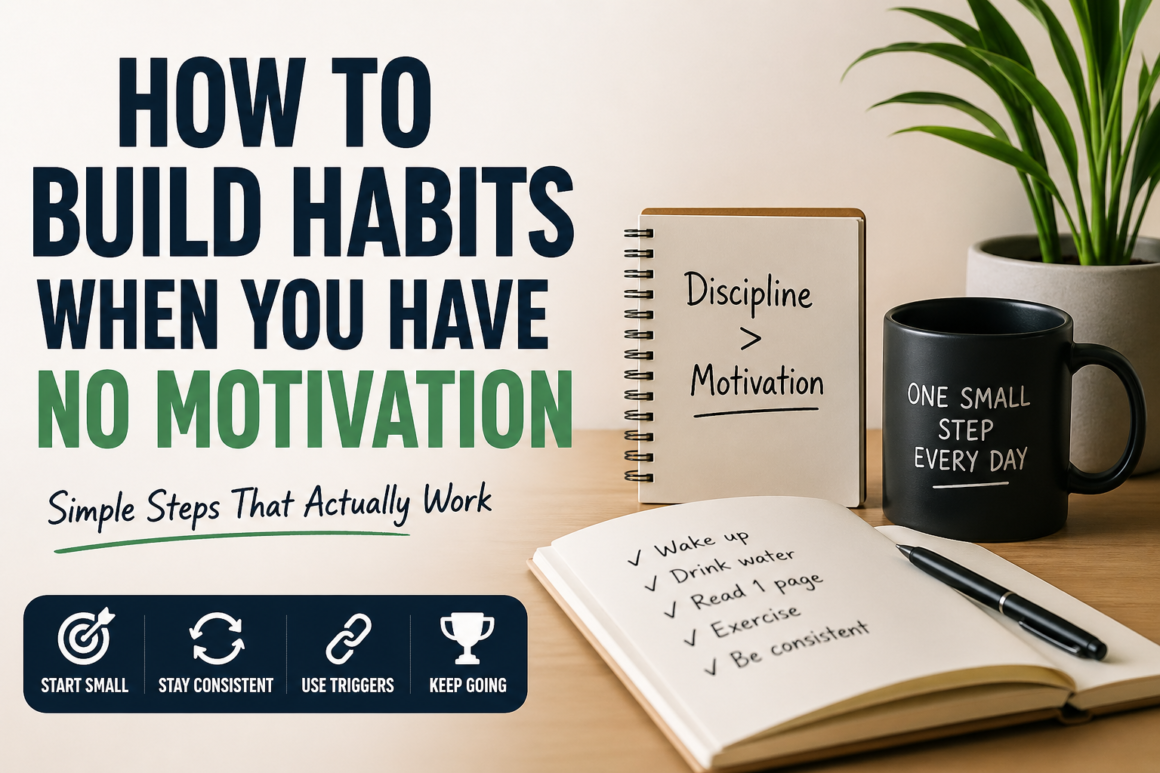
1. Why Motivation Doesn’t Work
Motivation feels powerful, but it doesn’t last.
Some days you feel motivated, and everything seems easy. But most days, motivation is low or completely missing. That’s normal.
The problem starts when you depend on motivation to take action.
Motivation is emotional. It changes based on your mood, sleep, environment, and energy levels. That’s why it’s unreliable.
I used to wait for motivation before starting anything. I thought I would begin once I felt ready. But that moment rarely came.
And even when it did, it didn’t last long.
👉 This is why many people fail to stay consistent.
If you rely on motivation, your habits will also be inconsistent.
Instead of waiting for motivation, focus on building a system that works even on low-energy days.
2. Start Small (The Real Game Changer)
One of the biggest mistakes people make is starting too big.
They try to:
- Work out for an hour
- Follow strict routines
- Make big lifestyle changes overnight
This creates pressure. And when motivation is low, it becomes impossible to continue.
Instead, start small.
Very small.
So small that you can’t make excuses.
For example:
- Do 5 push-ups
- Read 1 page
- Walk for 10 minutes
- Write 1-2 sentence
It may feel too easy, but that’s exactly why it works.
Small habits reduce resistance. They make it easier to start.
And once you start, it becomes easier to continue.
This is one of the most effective ways to build habits without motivation, especially for beginners.
👉 Small actions lead to consistency.
👉 Consistency leads to real results.
3. Make Your Habits Easy to Follow
If something feels difficult, you’re less likely to do it – especially when you don’t feel motivated.
So instead of making habits harder, make them easier.
Here are a few simple ways:
- Keep your workout clothes ready
- Place your book where you can see it
- Remove distractions from your environment
- Prepare things in advance
For example, if you want to read daily, keep your book next to your bed. If you want to exercise, prepare your clothes the night before.
These small changes reduce effort.
And when something is easy, you don’t need motivation to do it.
👉 This is how you build habits when you have no motivation – by reducing friction.
4. Focus on Consistency, Not Perfection
Many people fail because they try to be perfect.
They think:
- “If I can’t do it properly, I won’t do it at all.”
- “If I miss one day, I’ve failed.”
This mindset makes habits harder to maintain.
Instead, focus on consistency.
Even a small version of your habit counts.
For example:
- 5 minutes of exercise is better than skipping
- 1 page of reading is better than nothing
Missing one day is not a problem. Quitting completely is.
👉 Consistency builds habits, not intensity.
The goal is to show up regularly, even when you don’t feel like it.
Read Also: Morning Routine for People Who Wake Up Late (That Actually Works)
5. Use Triggers to Make Habits Automatic
One of the easiest ways to stay consistent is to connect new habits with existing ones.
This is called habit stacking.
For example:
- After brushing your teeth → drink water
- After your morning coffee → write a few lines
- After dinner → go for a short walk
These small triggers remind you what to do next.
You don’t have to think. You just follow the pattern.
This method works well if you’re trying to stay consistent with habits without relying on motivation.
When habits become automatic, motivation is no longer needed.
6. A Simple Real-Life Example
Let me share something simple.
When I tried to build a reading habit, I failed many times. I planned to read for 20–30 minutes every day, but I couldn’t stay consistent.
So I changed my approach.
Instead of 30 minutes, I started with just 1 page per day.
That felt easy.
Some days I read only one page. Other days I read more. But the important thing was — I didn’t skip.
After a few weeks, reading became part of my routine.
This is how small habits grow into bigger ones.
7. Common Mistakes to Avoid
If you’re struggling, you might be making one of these mistakes:
- Starting too big
- Waiting for motivation
- Trying to be perfect
- Quitting after missing one day
- Overcomplicating your routine
Avoid these, and habit-building becomes much easier.
8. How to Stay Consistent Without Motivation
If you want long-term results, focus on building a system.
Here’s what helps:
- Keep habits small
- Follow a simple routine
- Reduce distractions
- Stay patient
A habit building for beginners approach should be simple and repeatable.
Over time, repetition builds discipline.
And once discipline is built, you don’t need motivation anymore.
Conclusion
Building habits without motivation may seem difficult, but it’s actually simple when you understand how it works.
You don’t need to feel motivated every day. You just need to take small actions consistently.
Start small. Make things easy. Focus on showing up.
Over time, these small actions turn into strong habits.
If you want to build habits when you have no motivation, remember this:
You don’t need motivation – you need consistency.
Start today, even if it’s just one small step.
FAQ’s
Can you build habits without motivation?
Yes, you can build habits without motivation by focusing on small, consistent actions. Motivation is temporary, but habits are built through repetition and simple routines.
Why do I struggle to stay consistent with habits?
Most people struggle because they rely on motivation or try to do too much at once. Keeping habits small and realistic makes consistency easier.
What is the easiest way to start building habits?
Start with very small actions like reading one page or doing one push-up. Small habits reduce resistance and make it easier to stay consistent.
How long does it take to build a habit?
There is no fixed time. It depends on consistency. The more regularly you repeat a habit, the faster it becomes automatic.
What should I do if I lose motivation?
Don’t wait for motivation. Do a smaller version of your habit and keep going. Taking action helps rebuild consistency.