Has this happened to you? You check your phone for notifications, but instead of putting it away, you find yourself scrolling for the next half hour.
You are not alone. Before, phones were simply a tool to communicate. Now, they can entertain you, help you shop, tell you the news, and even help you do your work and school. They promote efficiency, but users can easily sacrifice their time as well.
People have the desire to reduce their screen time, but they simply have no idea how to spend their time without being bored. This is not a problem with the phone. The true problem is we have trained ourselves to look at screens for entertainment, leisure, and distractions. Most people have screens as a backup option to almost all the things they could do.
The silver lining is that you don’t need to quit technology and you don’t need to go off the grid to have screen time you are satisfied with. The goal is to replace bad habits or the nothing you do with your time with good habits or meaningful things you do with your time.
This guide offers you a number of suggestions that will help you limit your phone time without inhibiting your ability to live your life while having fun.
Why Is It So Hard to Reduce Screen Time?
How to Reduce Screen Time: A Common Problem
It is a good idea to know the reason behind screen addiction.
Most manufacturers build their products to be as attention-grabbing as possible. Social media, streaming, and online games all use algorithms constructed to never let the user run out of content.
Notifications, engagement, and media create a reward system to keep people hooked.
This causes people to pay constant attention to their devices as a habit, and many people have it as a reflex to not even notice when they do it.
Common triggers include:
- Boredom
- Stress
- Anxiety
- Loneliness
- Waiting in line
- Taking breaks
When screens become the solution for every uncomfortable moment, reducing phone usage becomes much harder.
How Too Much Screen Time Affects Your Life
Many people don’t realize how much screen time affects their daily routine.
Reduced Productivity
Constant notifications and interruptions make it difficult to focus.
Even checking your phone for a few seconds can break concentration and make it harder to return to important tasks.
Poor Sleep Quality
Many people use their phones right before bed.
Late-night scrolling can delay sleep and make it harder to wake up feeling refreshed.
Increased Stress
Social media often exposes people to endless information, news updates, and comparisons with others.
This constant stimulation can increase mental fatigue.
Less Time for Meaningful Activities
Every hour spent scrolling is an hour not spent learning, exercising, reading, or connecting with family and friends.
Focus on Progress, Not Perfection
A common mistake is completely quitting screen usage.
People try to totally delete screen based apps, turn off phones and try strict screen absence programs.
Total screen absence programs work for only a couple of days, after which, people revert to prior screen habits.
An approach that is much more effective is less screen time.
Instead of trying to avoid all screen habits, people can try to avoid all screen habits that are unnecessary.
As opposed to the rigid structure of no screen time, more time can be spent on things that are easier to track and maintain.
Replace Screen Time with Better Activities
People often fail to reduce their screen time because they take away screens without plugging in alternatives.
Putting your phone away will make you bored in a second.
Instead of just putting your phone away, you can make a list of fun things you enjoy.

Some good alternatives include:
- Reading books
- Walking outdoors
- Exercising
- Cooking
- Journaling
- Learning a new skill
- Listening to podcasts
- Spending time with family
The goal is not to stay busy all the time. The goal is to give yourself options other than scrolling.
Create Phone-Free Zones
One simple strategy is to create specific areas where phones are not allowed.
Good examples include:
The Bedroom
Keeping phones out of the bedroom can improve sleep quality and reduce late-night scrolling.
The Dining Table
Meals are a great opportunity to connect with family and enjoy food without distractions.
Study or Work Areas
Removing phones from your workspace can improve focus and productivity.
These small boundaries make it easier to build healthier screen habits.
Also Read: Morning Routine for People Who Wake Up Late (That Actually Works)
Turn Off Unnecessary Notifications
Notifications are designed to grab attention.
Every alert encourages you to unlock your phone, even when you’re focused on something else.
Consider turning off notifications for:
- Social media apps
- Shopping apps
- Games
- Entertainment platforms
Keep only the notifications that are genuinely important.
Many people are surprised by how much their screen time decreases after making this simple change.
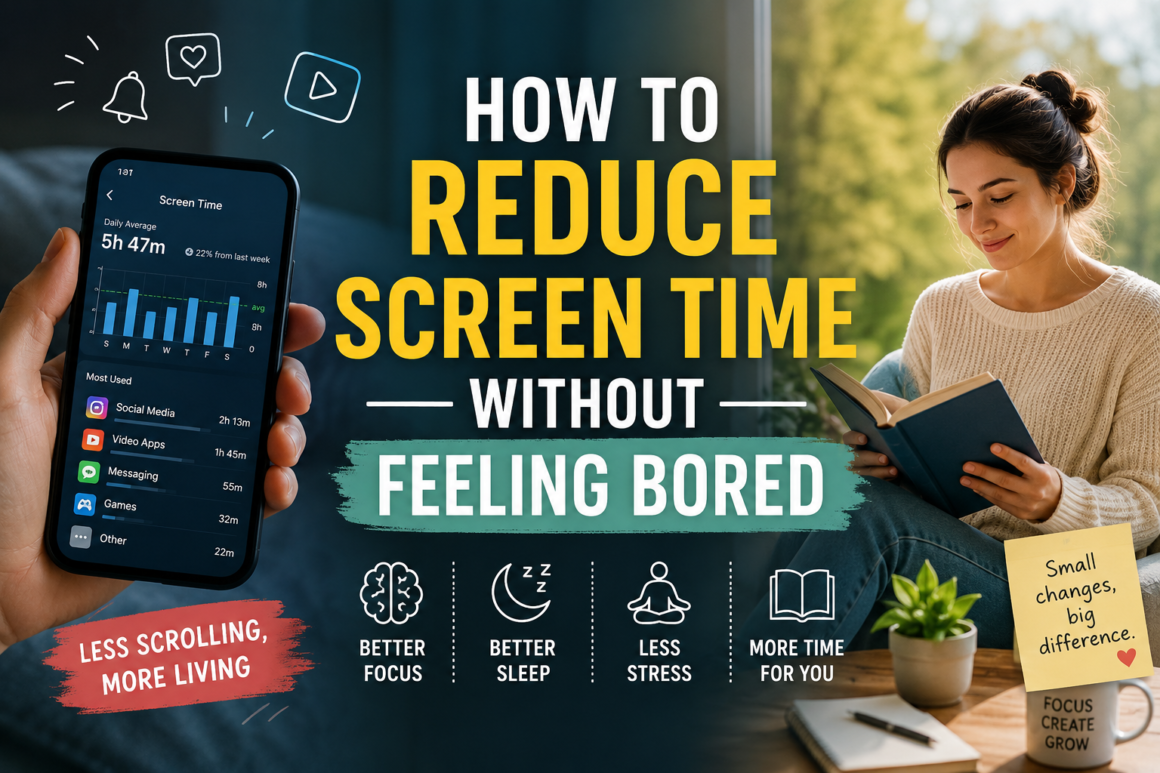
Use Screen Time Tracking Tools
You can’t improve what you don’t measure.
Most smartphones include screen time tracking features that show how much time you spend on different apps.
Review your usage honestly.
You may discover that:
- Social media consumes several hours daily
- Video apps take more time than expected
- Certain apps are responsible for most of your screen time
Awareness often leads to better decisions.
Set Realistic Screen Time Limits
Cutting down screen time is about having realistic expectations.
This means instead of saying something like:
“I will only use my phone for 30 minutes per day.”
You should say:
“I will reduce my daily screen time by one hour this week.”
Making small changes really helps and motivates you to improve.
Once it becomes a habit, reducing screen time isn’t a challenge.
Avoid Using Your Phone First Thing in the Morning
Many people start their day by checking notifications, social media, and emails.
This habit immediately shifts attention toward screens.
Try spending the first 30 minutes of your morning without your phone.
You could:
- Drink water
- Stretch
- Exercise
- Read
- Plan your day
Starting the day intentionally often reduces screen dependency throughout the day.
Make Real Life More Interesting
One reason screens are difficult to replace is because they provide constant stimulation.
To reduce screen time successfully, your offline life needs to become more engaging.
Consider:
- Exploring new hobbies
- Learning a language
- Going for daily walks
- Joining local groups
- Developing creative skills
When your life contains activities you genuinely enjoy, screens naturally become less appealing.
The 30-Minute Rule
A useful strategy is the 30-minute rule.
Whenever you feel the urge to scroll, spend 30 minutes doing another activity first.
Examples:
- Reading
- Cleaning
- Exercising
- Working on a project
Often, the urge to check your phone disappears.
This simple habit helps break automatic phone-checking behavior.
Be Patient with Yourself
An essential part of reducing screen time is realizing that you won’t be perfect.
Some days you will spend more time on your phone.
That’s okay.
Wanting to remove technology from your life entirely is not the goal. Instead, you want to develop a better relationship with technology.
Temporary perfection is not the goal. Instead, with the focus on the small, incremental changes, positive results will happen.
Remember: small, consistent changes over time make a positive, large difference.
Also Read: How to Build Habits When You Have No Motivation (Simple Guide)
Conclusion
Cutting screen time without feeling bored is about using screen time intentionally, not getting rid of it totally.
Set limits to your screen time, reduce distracting notifications, create phone-free areas, and substitute screen time for fulfilling activities. This way, you won’t feel deprived of phone time.
Don’t forget the purpose of reducing screen time. Less screen time can lead to the focus, sleep, and productivity you may be missing along with providing a better, more balanced lifestyle.
Screens should be used to support your lifestyle, not control your lifestyle, so aim for balance rather than a screen time stoppage.
Frequently Asked Questions (FAQs)
How can I reduce screen time without feeling bored?
Replace screen time with activities you enjoy, such as reading, exercising, walking, learning new skills, or spending time with family and friends.
What is a healthy amount of screen time per day?
The ideal amount varies by person, but reducing unnecessary screen usage and focusing on intentional use is generally beneficial.
Does reducing screen time improve sleep?
Yes. Limiting screen use before bed can help improve sleep quality and make it easier to fall asleep.
How do I stop checking my phone constantly?
Turn off non-essential notifications, create phone-free zones, and use screen time tracking tools to become more aware of your habits.
What can I do instead of scrolling on my phone?
You can read, exercise, cook, journal, walk outdoors, learn a new skill, or spend time with friends and family.
Are screen time limits effective?
Yes. Realistic screen time limits can help reduce excessive phone use and encourage healthier digital habits.
How long does it take to reduce screen addiction?
The timeline varies for everyone, but consistent effort and small habit changes often lead to noticeable improvements within a few weeks.
Can reducing screen time improve productivity?
Absolutely. Fewer distractions make it easier to focus, complete tasks, and manage time more effectively.